Neon Only Glows One Colour
Most of the rainbow on a night street is borrowed; the gas that gave the signs their name has a single, stubborn orange-red.
Neon was isolated in 1898, and by around 1910 the French engineer Georges Claude was lighting tubes of it in Paris. Put a high voltage across a sealed glass tube of pure neon at low pressure and it gives off one colour, a warm red-orange. The blues come from argon with a trace of mercury, and most other shades come from phosphor coatings inside the glass or from tinted tubes, so the word neon on a sign is often a job description more than a chemical one.
The tubes are still bent by hand, heated section by section over a gas flame until the glass softens, and a single run of tube often has to spell out a whole word. The joins between letters are painted black on the glass so they stay dark, which is why a close photograph of an old sign shows small opaque bridges between the lit strokes. Many signs installed today are LED strips inside a silicone sleeve: they glow more evenly, draw less power and do not hum, but they also lose the faint flicker and the soft halo a gas discharge throws onto a wet wall.
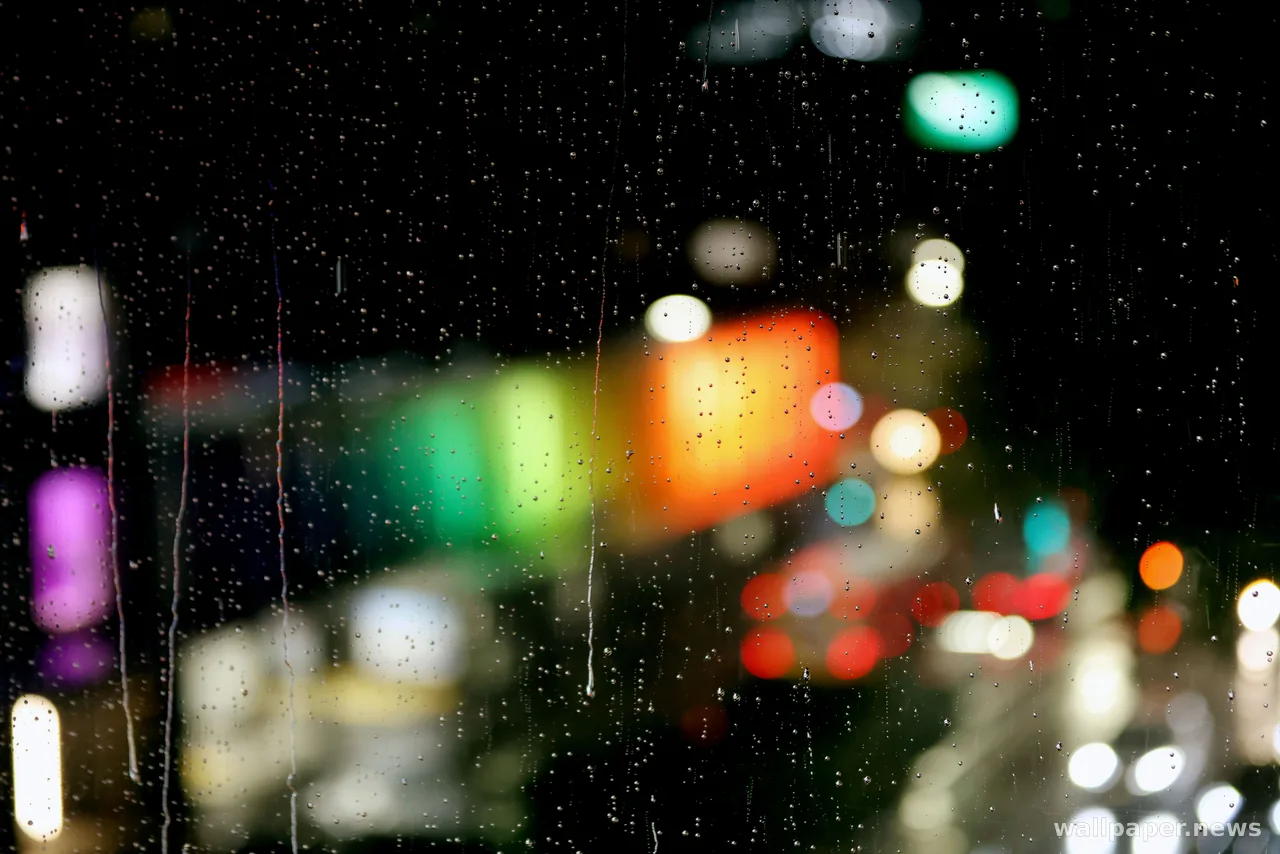
Neon red is hard on cameras as well. The signal piles up in the red channel and clips long before the rest of the frame is bright, so a sign that looked deep red in person often records as a flat orange patch with the letters lost inside it, and careful photographers expose for the tube and let the street fall dark. On a screen the colour is rebuilt from red, green and blue subpixels, and neon's orange-red sits close to the edge of what a standard display can produce, so the wallpaper version is always a slightly tamer copy of the tube.