Snow Plumes: The Streak a Summit Trails
The white streak drawn sideways from a high peak on a clear day is wind made visible, and climbers watch it as closely as the forecast.
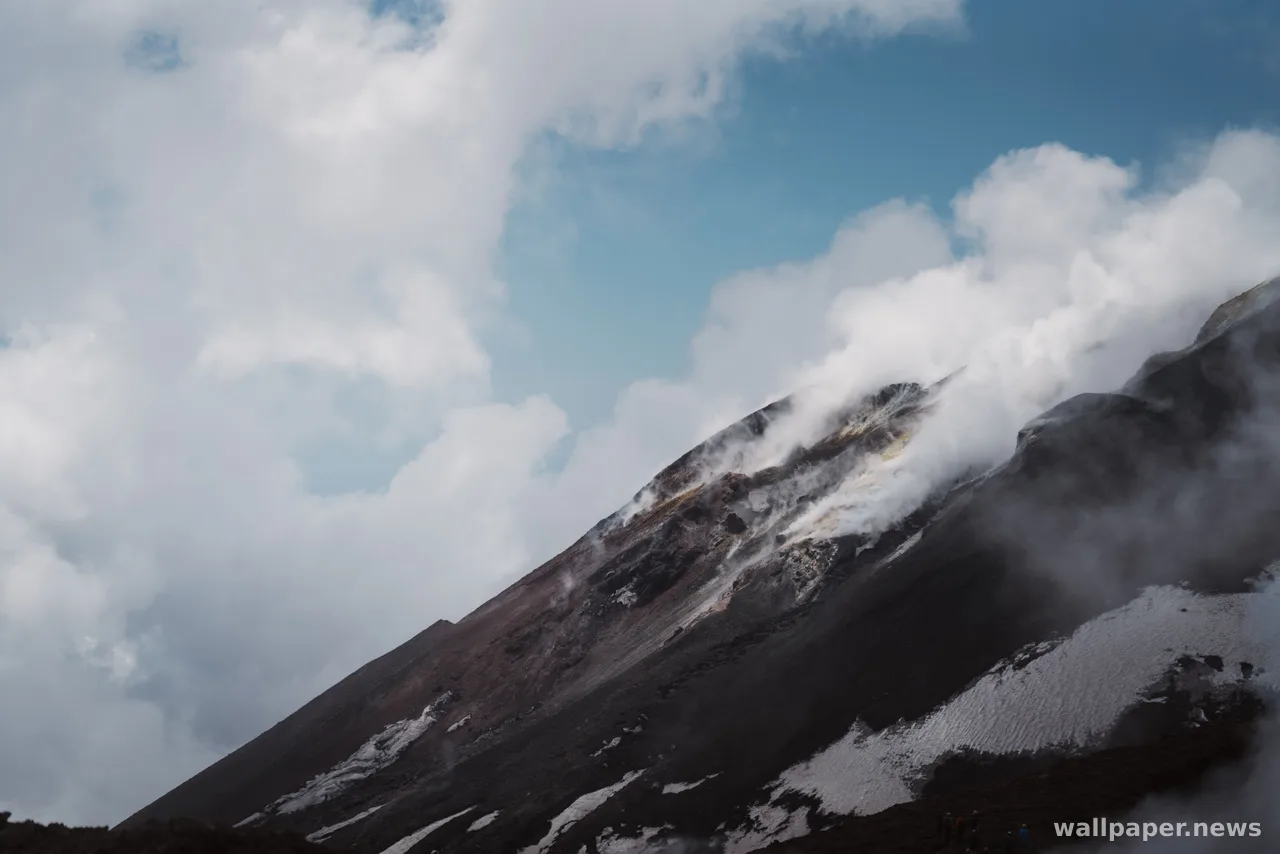
On a cloudless day a high peak can still trail a long white streak from its top, drawn out sideways and fading into blue. Usually it is snow: wind above 60 or 70 kilometres an hour lifts loose grains off the windward slopes and carries them over the ridge, where they stream out on the sheltered side for hundreds of metres, sometimes for kilometres. The plume always points downwind, so a single photograph records the wind's direction at an altitude no weather station reaches.
A related form is the banner cloud, which needs no snow at all. As air flows past a steep, pointed summit, an eddy forms on the lee side and lifts moist air there, which cools and condenses, so a cloud stays attached to one flank while the wind blows straight through it. On Everest the plume works as an instrument: a long, flat streak means jet-stream winds at the top, and expeditions wait for the days when it shrinks or vanishes.
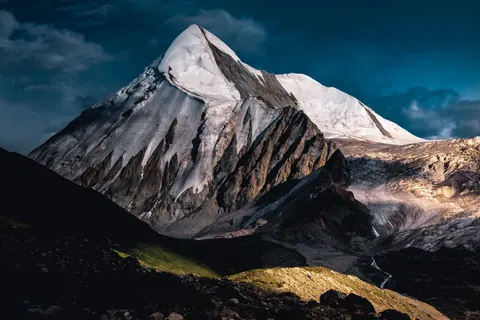
Photographing one is mostly a matter of light and shutter speed. Backlit by a low sun, the plume glows at its edges and the rock behind it goes darker; a shutter of 1/500 s keeps the grain of the blowing snow, while a longer exposure on a tripod smooths it into a soft veil. Framed with the summit near one side and the plume running into open sky, the picture leaves most of the frame as clean blue, which gives a desktop full of icons more room than a peak standing dead centre.