Arches: How Stone Holds an Opening
Stone breaks easily when bent and almost never when squeezed, and the arch is the shape that keeps it squeezed.
A stone beam laid across two posts can only span a short gap, because the weight above bends it and the underside is pulled apart, and stone resists pulling poorly. An arch avoids the problem by never asking the stone to bend. The load travels around the curve as pressure, wedge pushing on wedge, down into the piers on either side, and stone can take an enormous amount of pressure before it fails. The arches of the Pont du Gard were laid largely without mortar and have stood for close to two thousand years on that principle.
The catch is that an arch only works once it is complete. Builders set the wedge-shaped stones over a timber frame called centering, and the frame could come out only after the keystone was in place at the top. Every arch also pushes outward at its feet, which is why a row of them leans on its neighbours and why Gothic cathedrals, with pointed arches and tall thin walls, grew flying buttresses along their sides. In the seventeenth century Robert Hooke noted that a hanging chain, turned upside down, gives the ideal curve: the line where every link is in pure tension becomes the line where every stone is in pure compression.
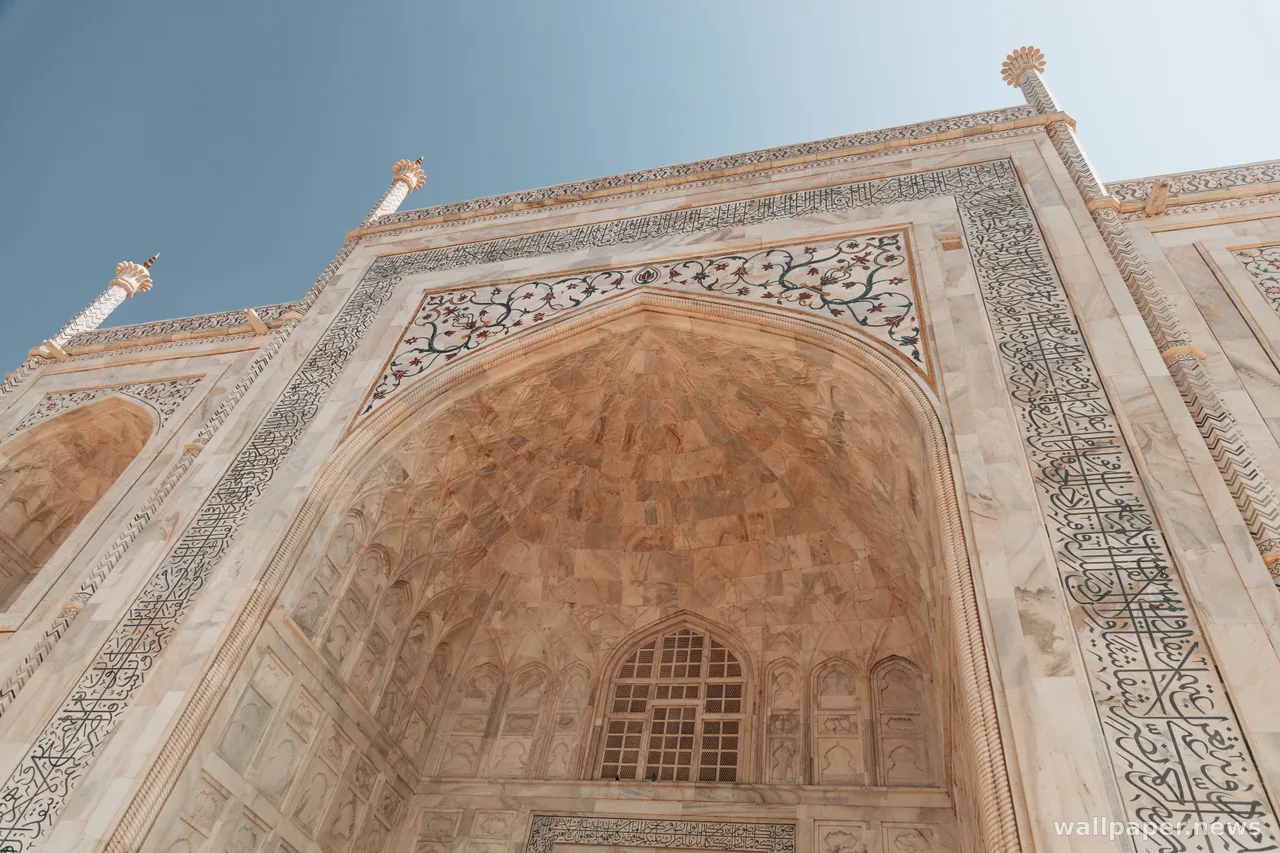
On a screen, arches bring some of that settled quality with them. A single opening frames whatever lies beyond it, a cloister of them sets up a rhythm the eye follows toward the vanishing point, and both leave plain wall at the edges where icons can sit without trouble. Look closely at the joints, though: the thin dark lines between the stones are where the structure is actually doing its work.