The Weather a Waterfall Makes
Stand near the base of a large fall and you are inside a small climate of its own, with its own wind, rain and rainbow.
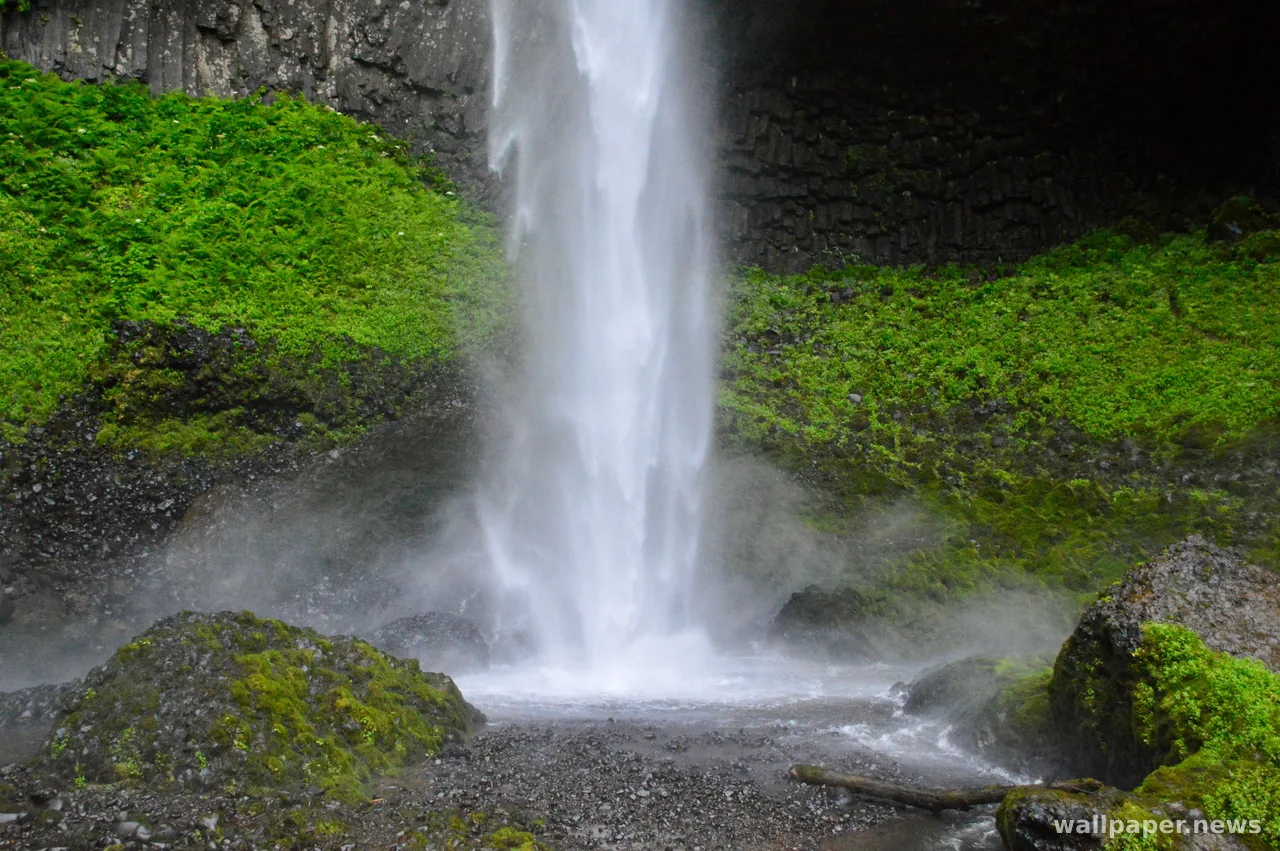
A waterfall does not only fall. As it drops, the water drags air down with it, and at the base that air has nowhere to go but outward, so even on a still day a steady wind blows away from the pool. The water itself breaks into drops on the way down and again when it lands, and the finest of them never settle; they hang in the air as a cloud you walk into and come out of damp.
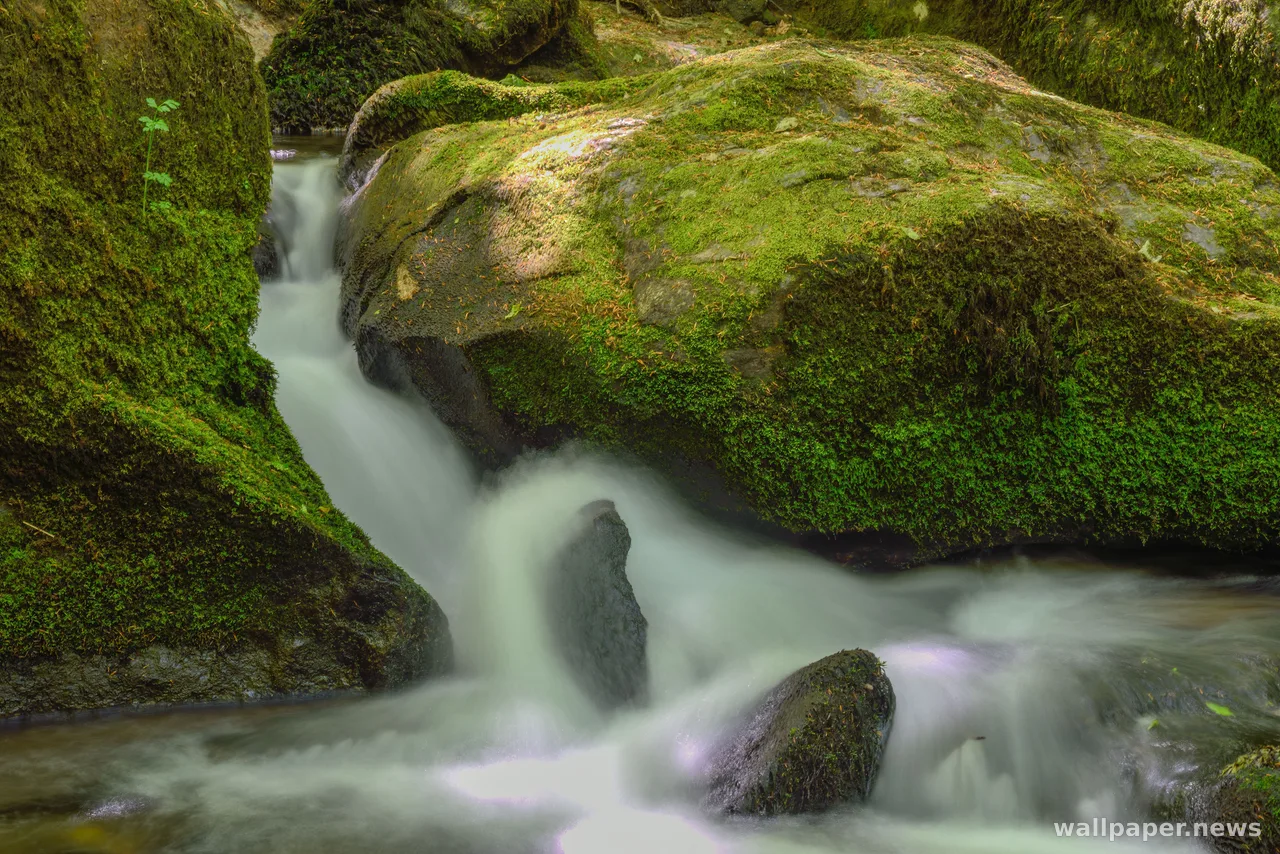
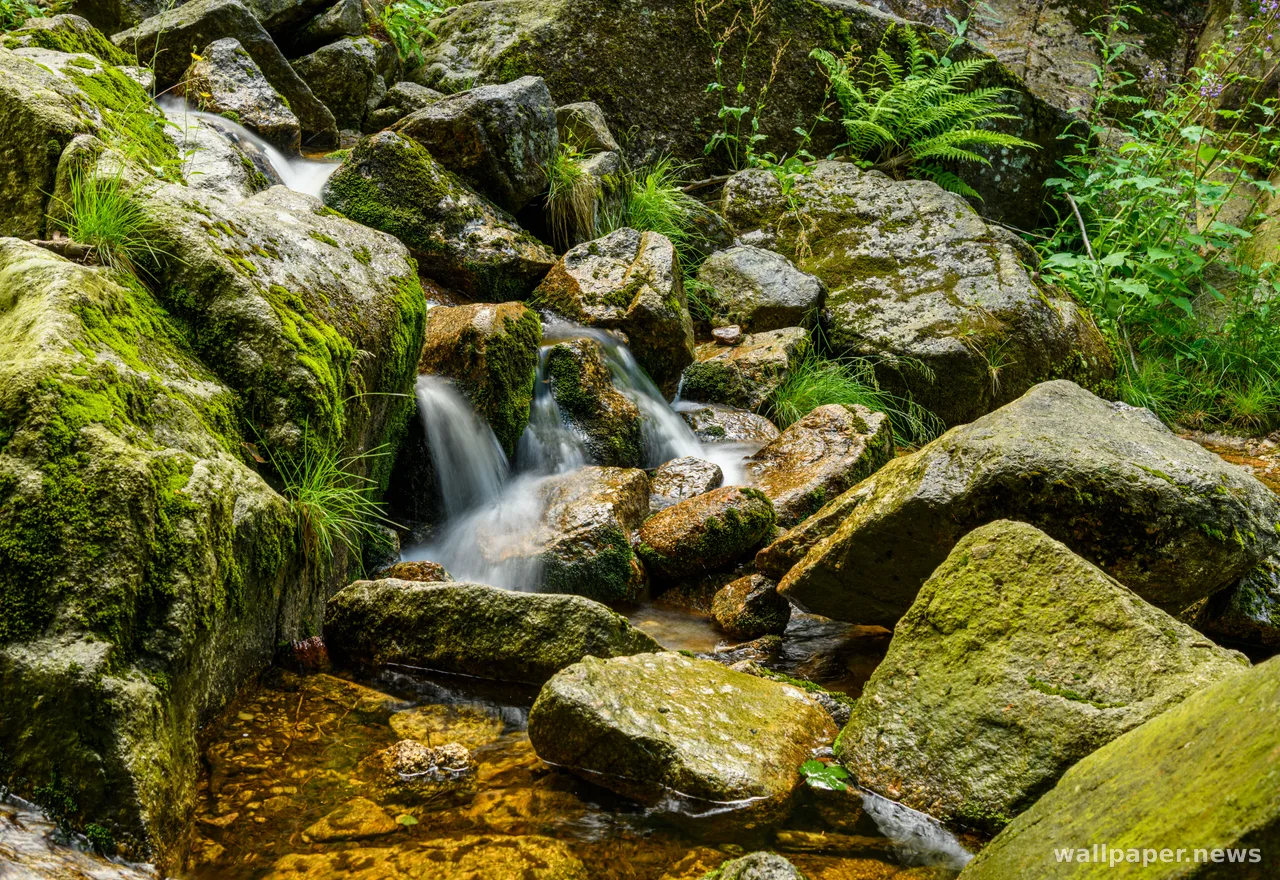
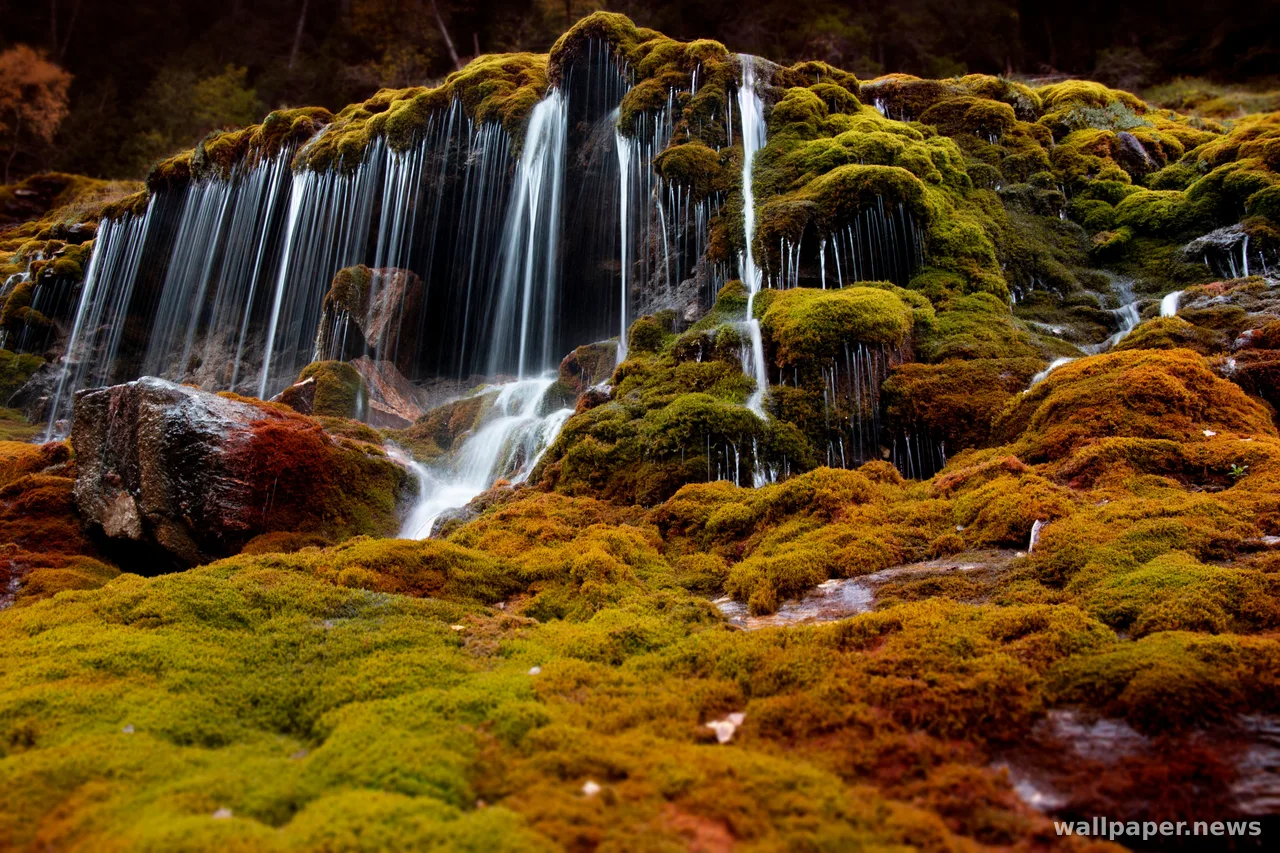
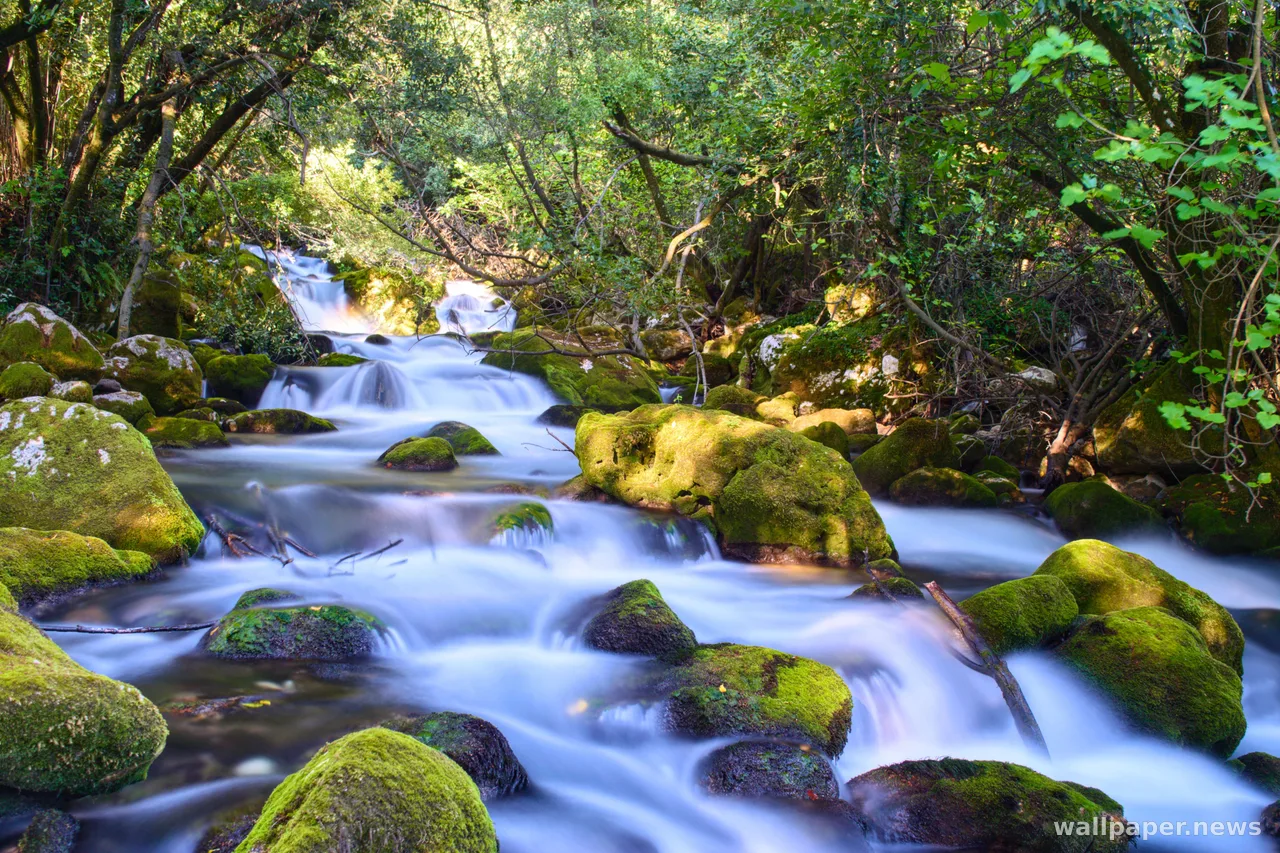
That cloud keeps the ground around it close to saturated all year, which is why the rocks beside large falls are wrapped in moss and fern while the slope a hundred metres away is dry. Below Victoria Falls the spray feeds a strip of rainforest in a region that is otherwise savanna, and in Tanzania's Kihansi Gorge a small toad once lived only inside the spray zone of one waterfall. With the sun behind you, the same droplets bend light into a low rainbow that seems to start on the near bank, and on clear full-moon nights a few falls show a faint white moonbow.
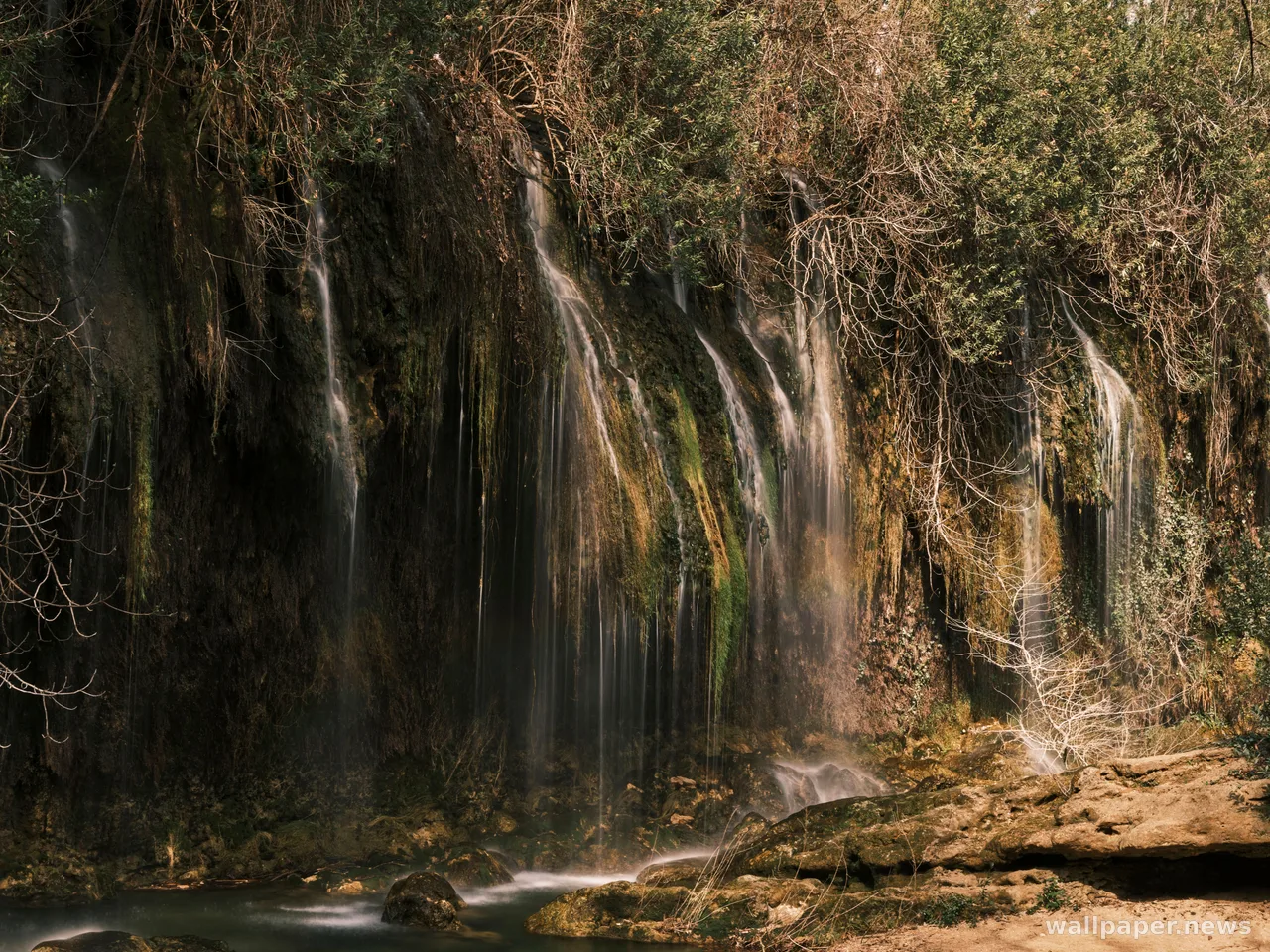
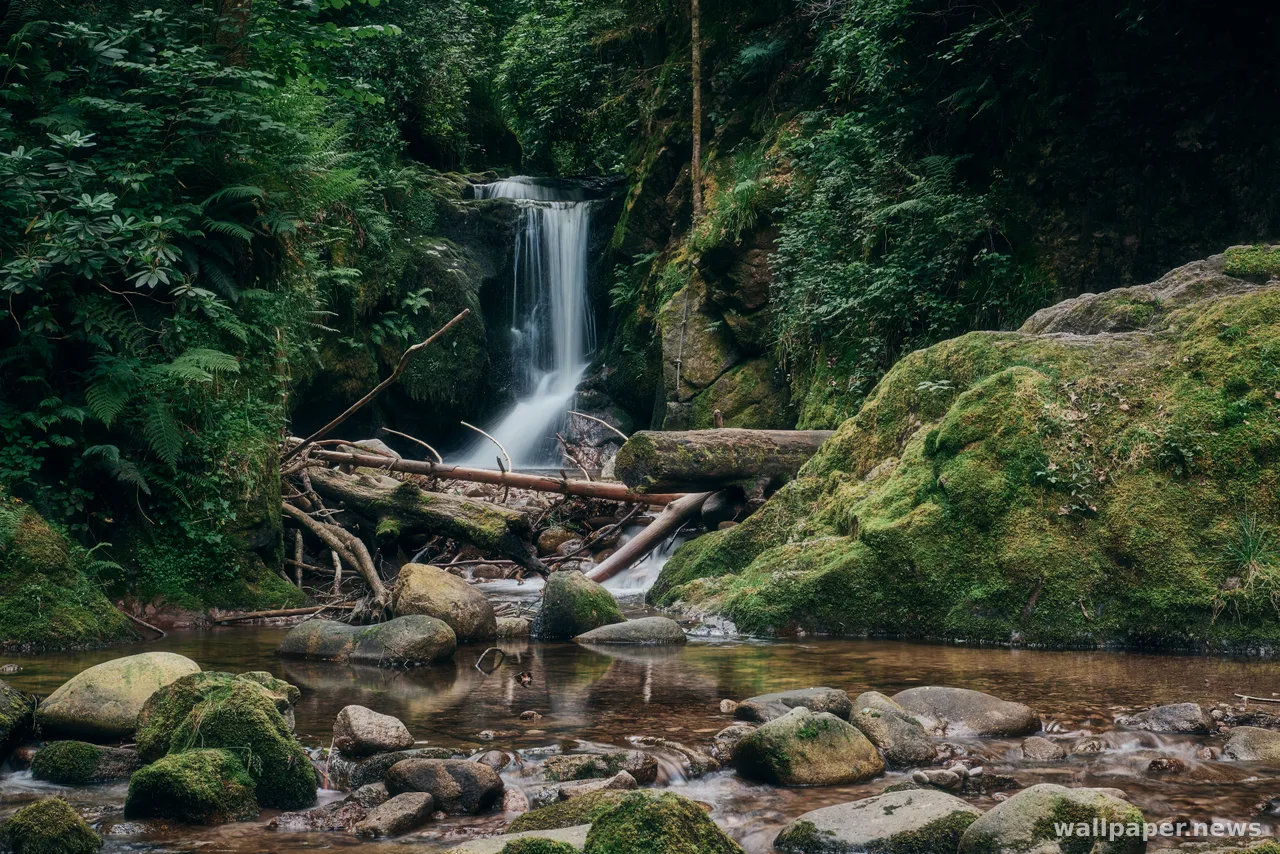
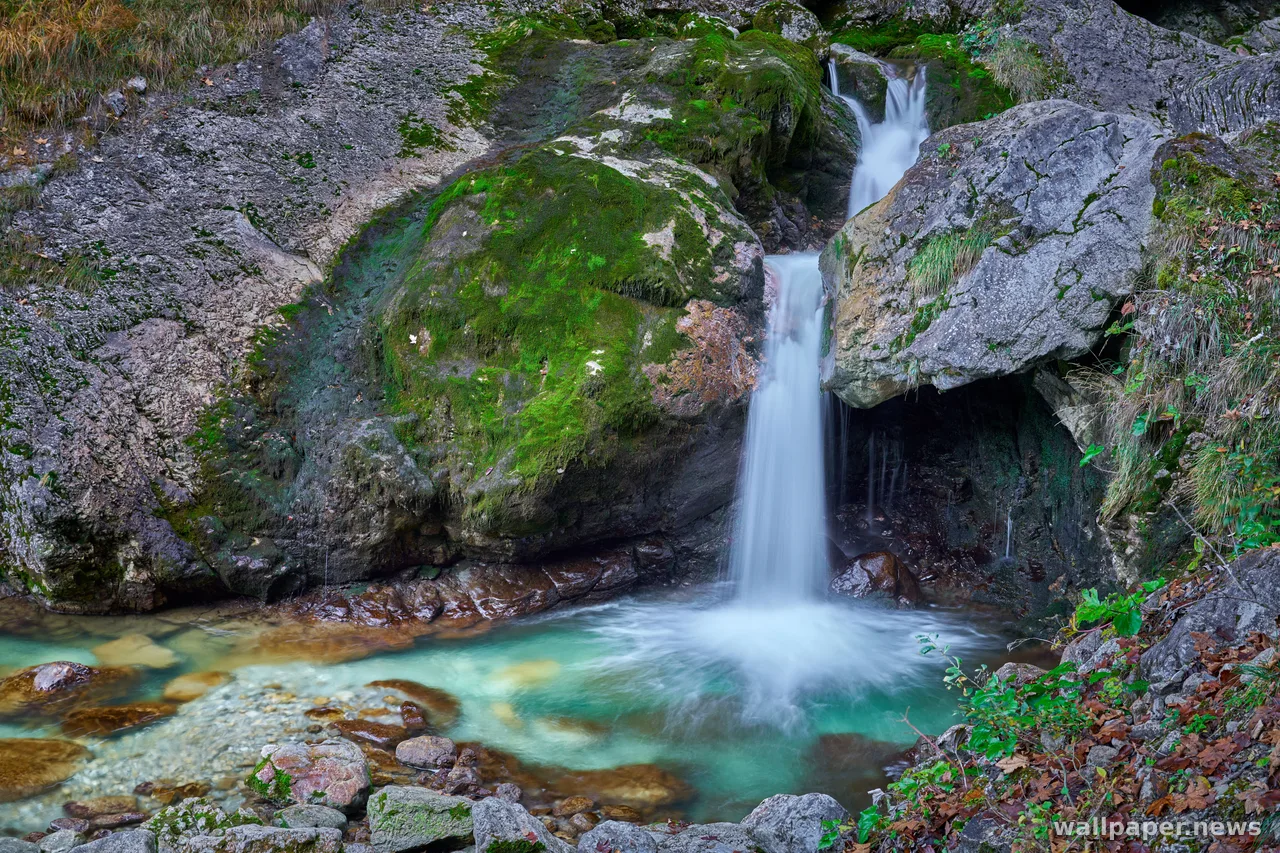
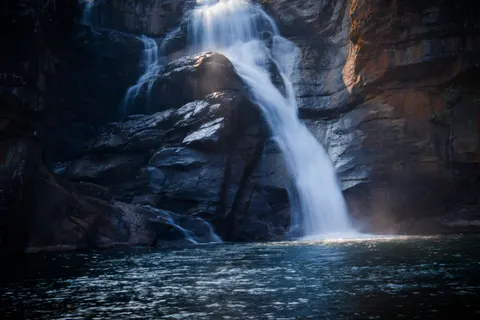
Photographs of waterfalls usually show the column of water, but the ones that feel wettest include this weather as well: haze softening the far cliff, beads on the edge of the frame, leaves all turned the same way by the draught. On a screen that haze does useful work, lowering the contrast of everything except the falling white line, so the eye has one place to rest and the rest of the picture stays a soft grey green.