Boat Wakes: The Angle the Water Keeps
Seen from above, a boat leaves a V behind it, and for most boats on deep water that V opens to nearly the same angle whatever the speed.
From a drone or a cliff, a moving boat is a small point dragging two straight lines across the water. In 1887 Lord Kelvin worked out why the lines sit where they do: the waves a moving object makes interfere so that they pile up along an edge about 19.5 degrees either side of its path. The full V is therefore close to 39 degrees, and it comes out roughly the same for a duck, a ferry and a rowing boat, as long as the water is deep.
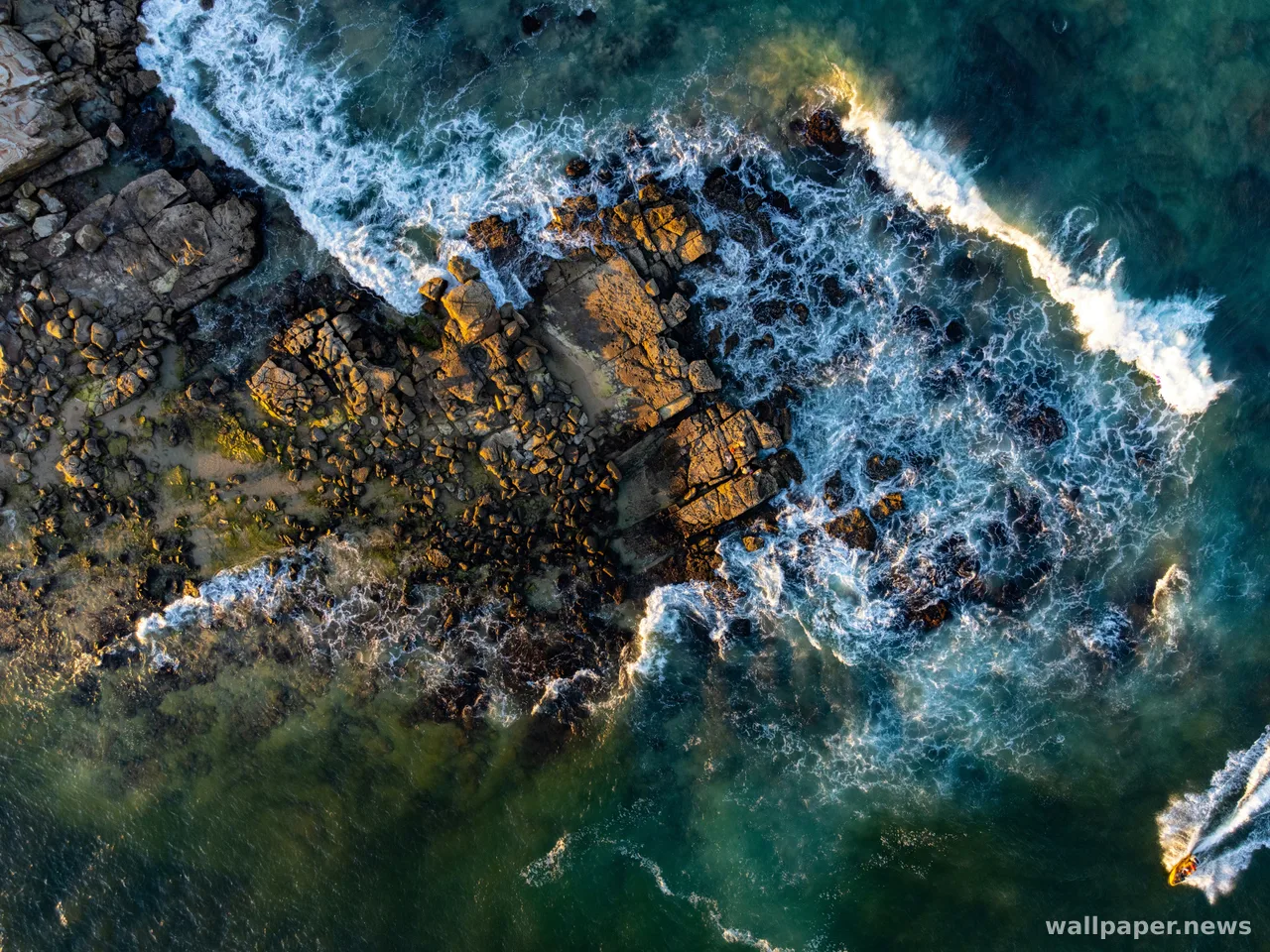
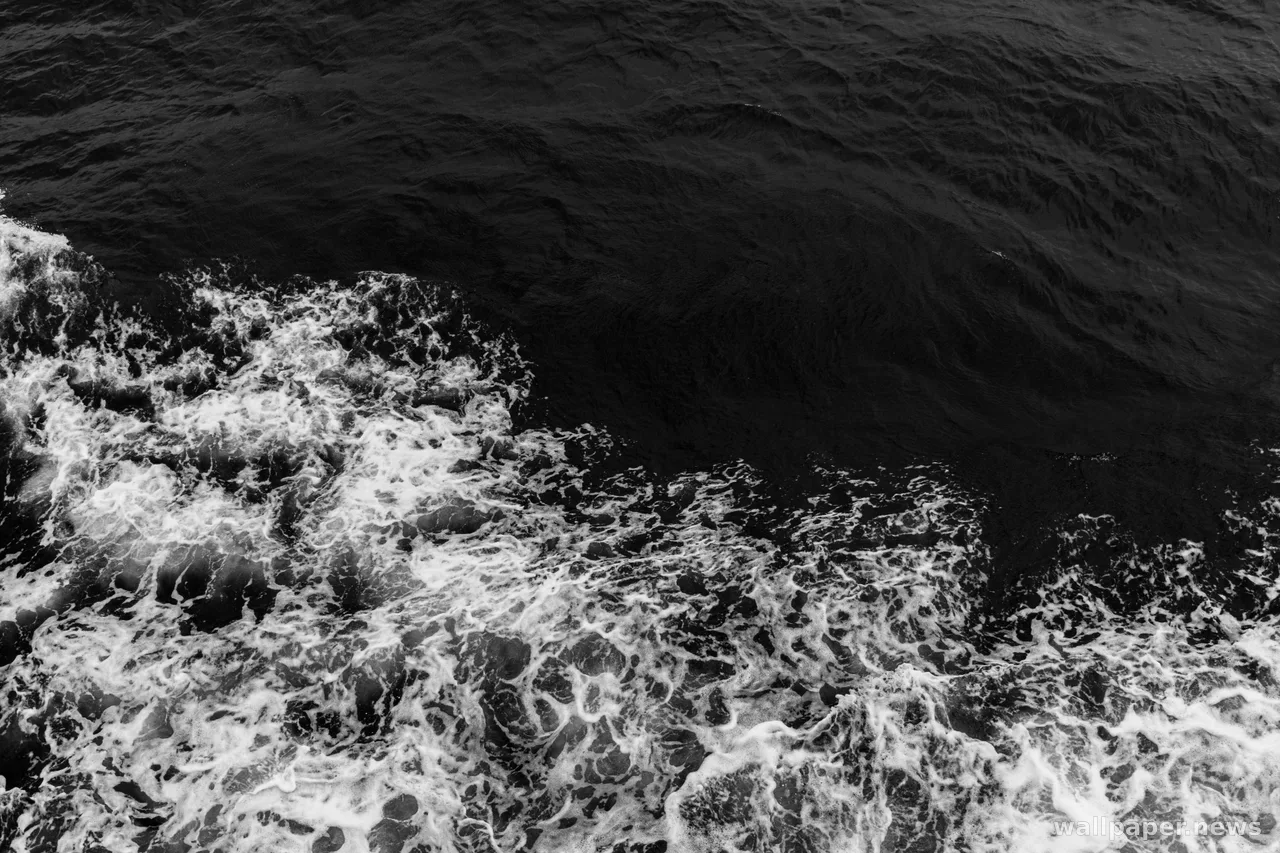
Fast boats bend the rule. Measurements published in 2013 showed that once a hull moves quickly enough for its length, the wake narrows, which is why a speedboat can draw a sharper V than a ferry. Inside the V sits a second pattern, short curved crests running across the track, and directly behind the stern a band of white water where the propeller has churned air into the sea. On a calm day the two outer lines stay readable for hundreds of metres after the boat itself has gone.
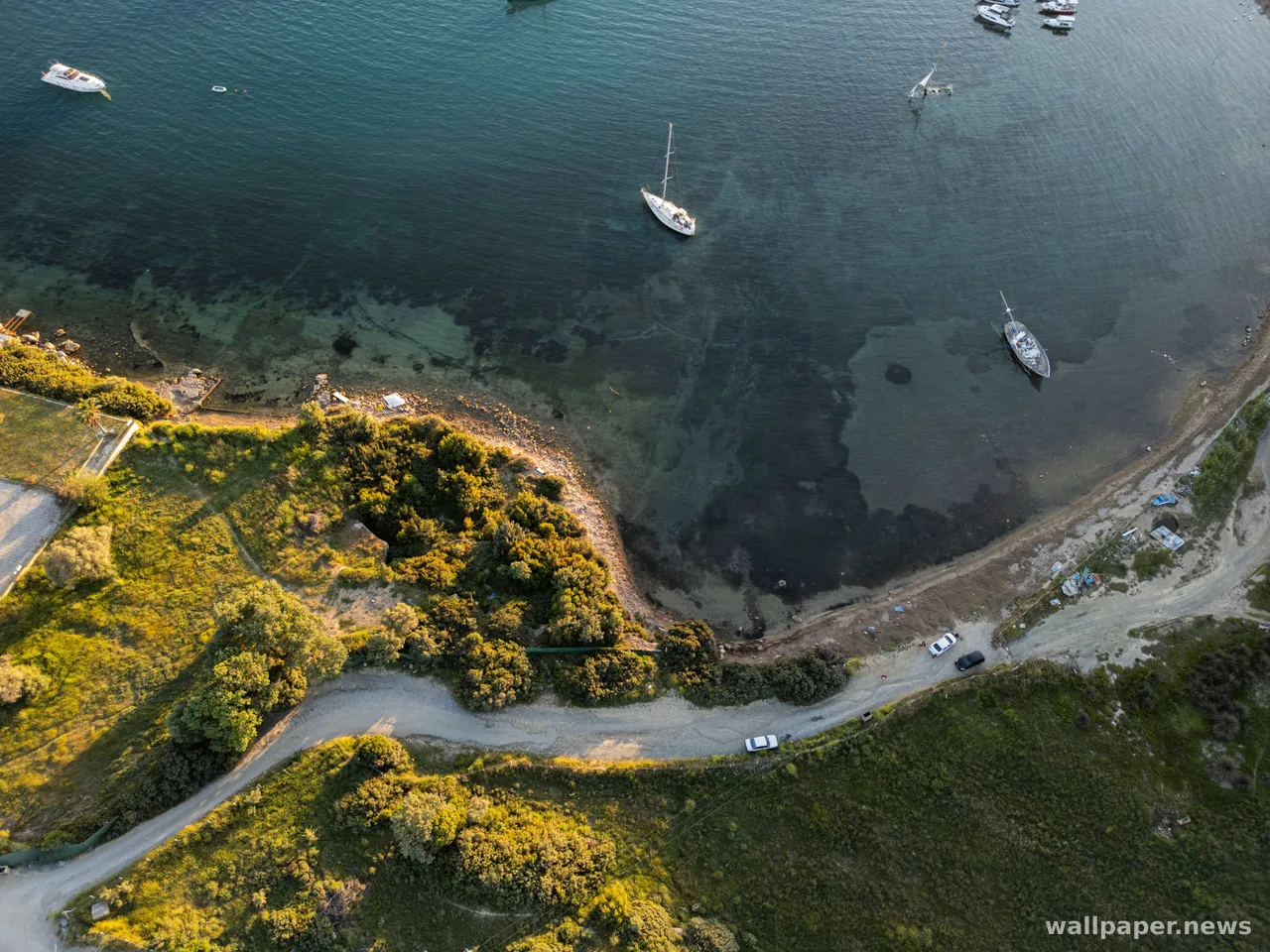
In a top-down photograph this geometry does most of the composing. The boat is tiny, the water is a flat field of colour, and the wake supplies two diagonals that run out of the frame. On a desktop the open end of the V is the part that wants room, so a picture where the boat sits in one corner and the lines spread toward the other leaves a quiet side for icons, with nothing but blue and the faint ribs of the waves.