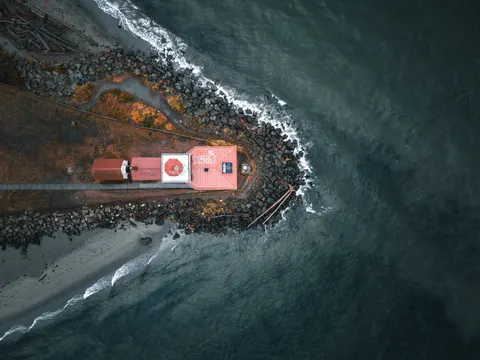
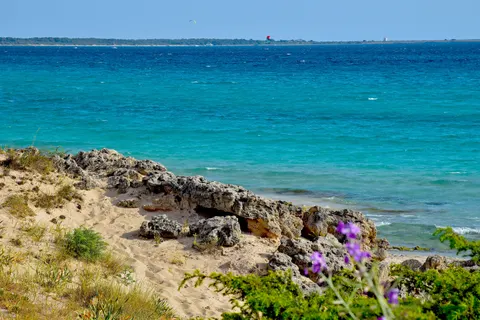
What Sea Fog Does to a Coastline
It doesn't hide the shore so much as loosen it, one edge at a time.
Sea fog arrives without weather. There is no wind to announce it, no cloud you can point to; the horizon simply thickens, and the water that was blue an hour ago turns the color of breath on cold glass. A headland that stood sharp against the sky becomes a suggestion of a headland, then a rumor, then a pale place where a headland used to be.
What the fog removes, it removes gently. Distance goes first — the far rocks, the boats that were specks. Then the middle ground softens, until the only thing left with a hard edge is whatever stands closest: a single post, a strand of kelp, the wet lip of a stone. Photographers wait for this because it does their work for them; it deletes the clutter and leaves one clean line, which is usually all a picture needs.
On a screen the effect is quieter still. There is no cold to feel, no salt on the lip, only the gradient — grey easing into paler grey, a coastline that agrees not to insist on itself. It makes a restful wallpaper for the same reason the real thing makes a restful morning: nothing in it is asking to be looked at, and so, oddly, you keep looking.