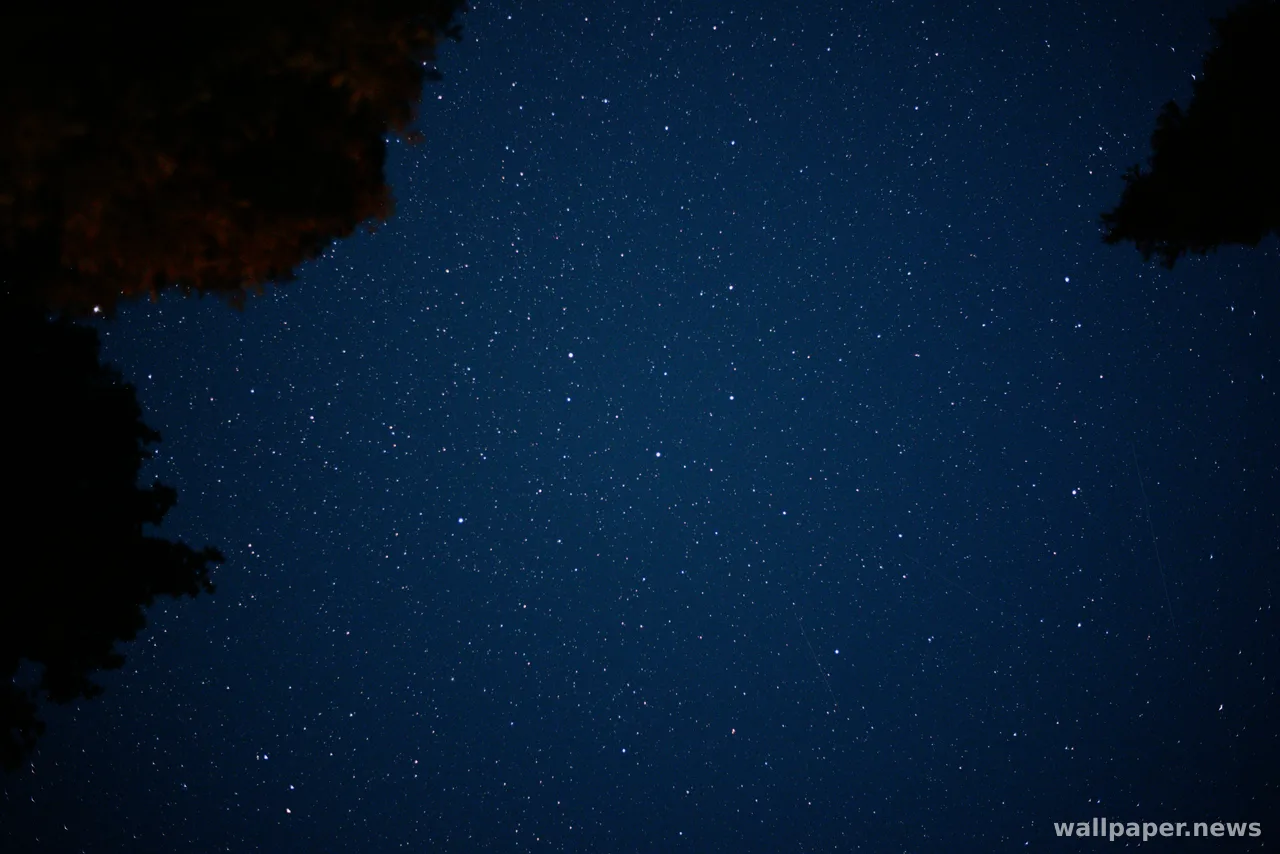
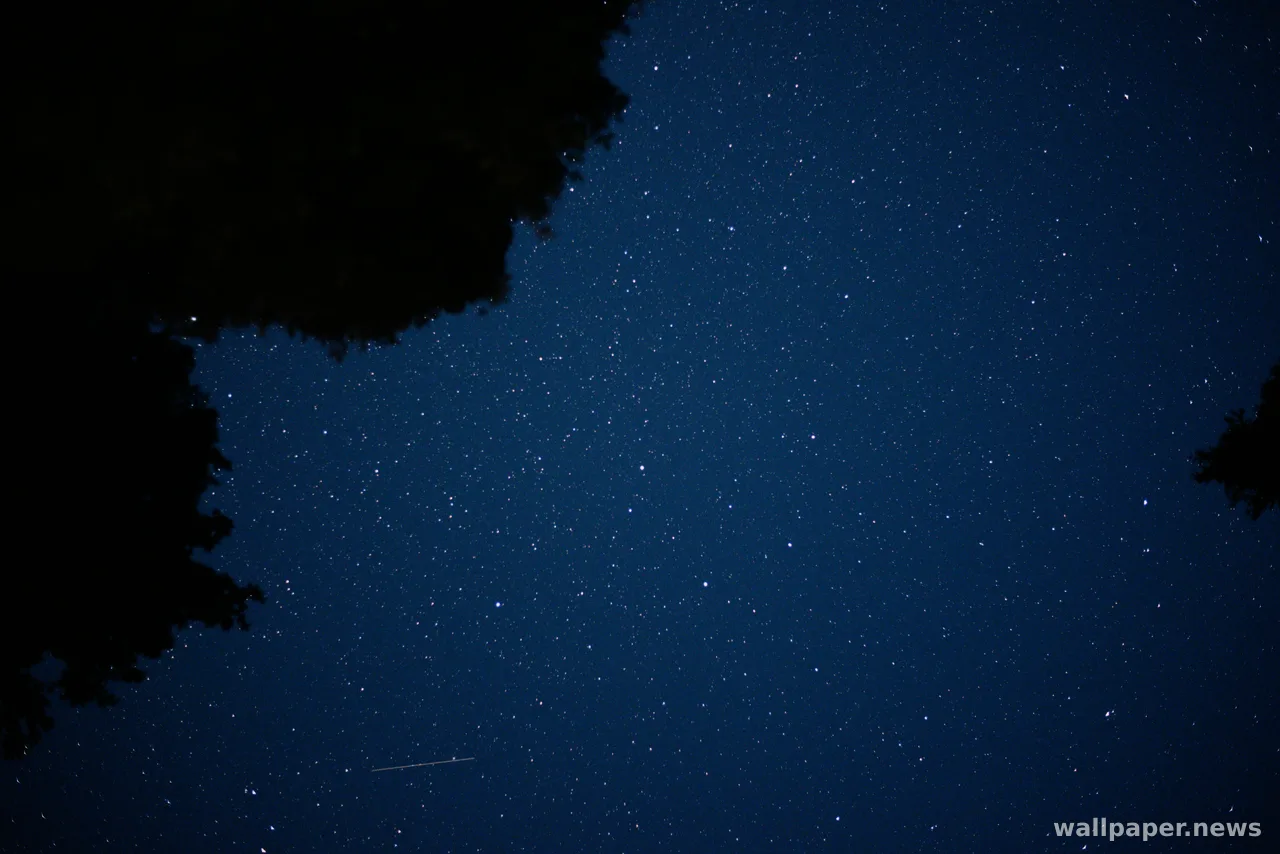
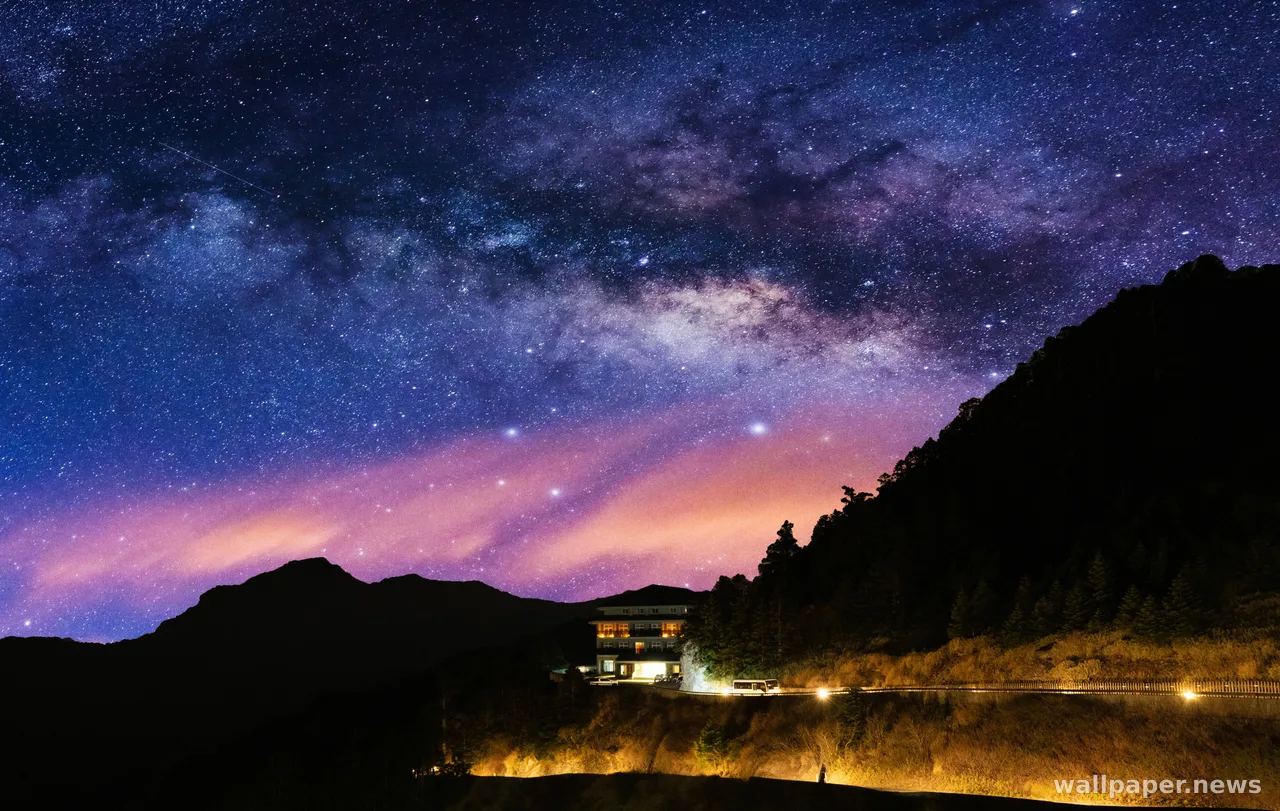
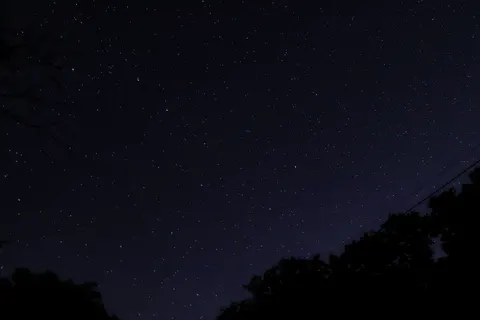
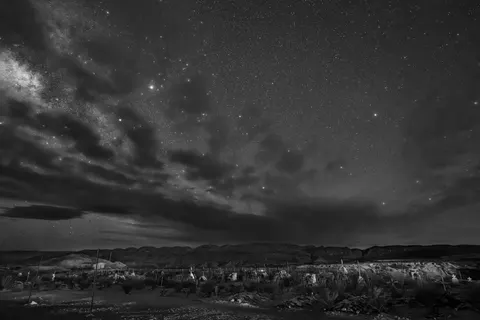
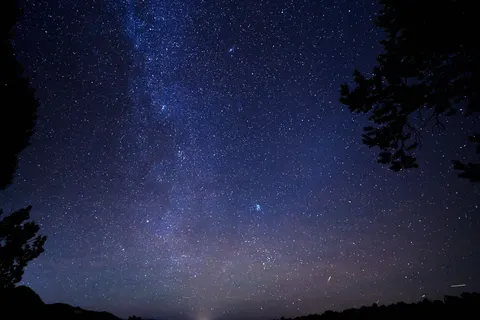
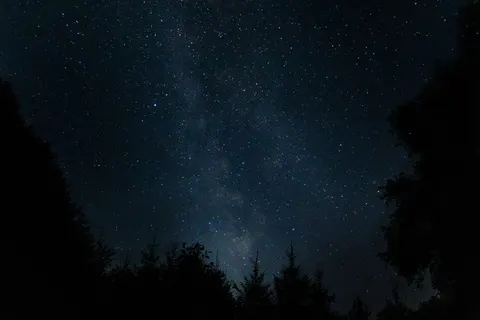
Nothing in the sky is moving; the ground is. The earth turns fifteen degrees every hour, so a quarter of an hour of open shutter draws each star as a short arc of not quite four degrees, and an hour draws one you can measure with a thumb. Where you point the lens decides the shape: near the pole the arcs are tight circles around a still point, while stars over the equator leave long lines that look almost straight.
Most of these pictures are no longer one very long exposure. A single four-hour frame collects sensor heat and can be ruined by one aircraft crossing it, so photographers shoot a few hundred thirty-second frames and stack them afterwards. The seam shows if the camera pauses between shots: instead of continuous arcs you get dotted lines, each gap the second the shutter spent closed.
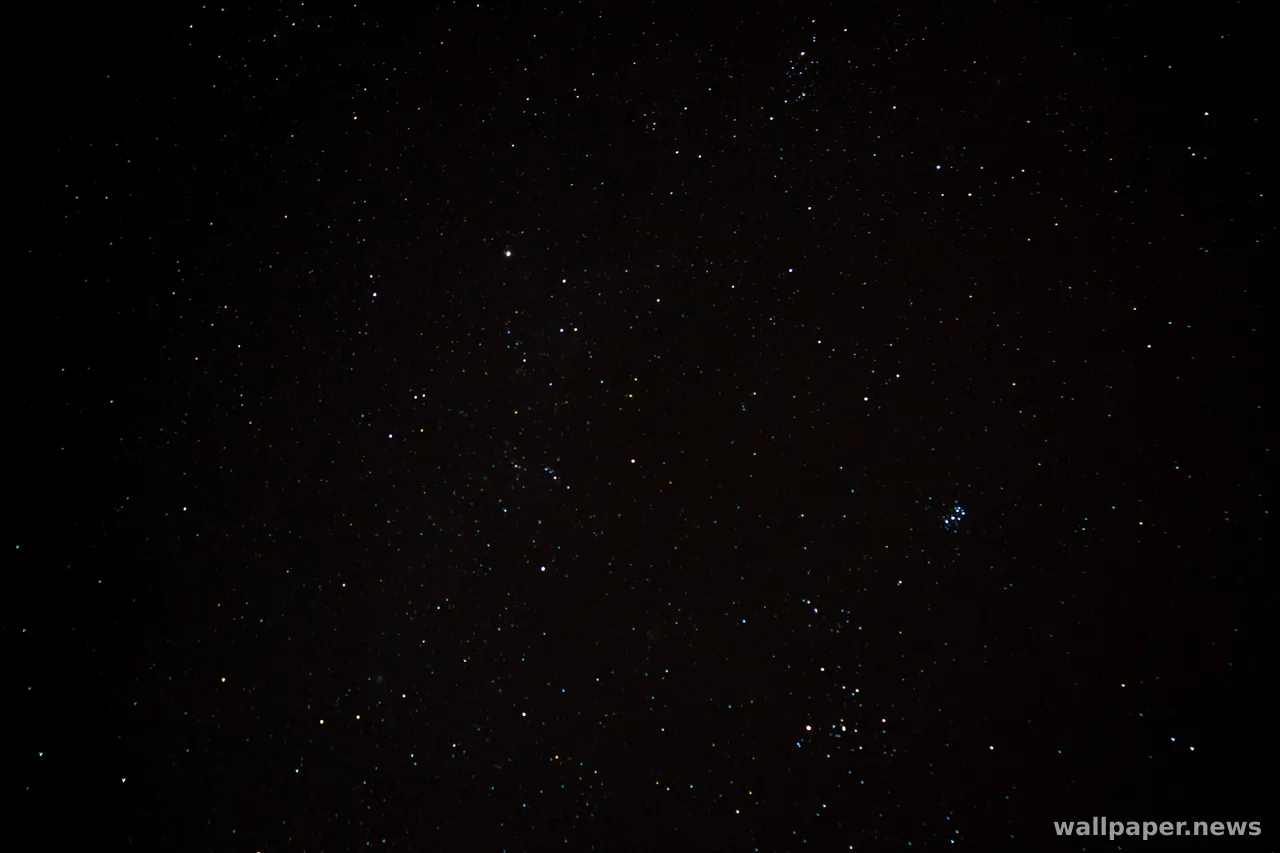
Smearing a star also spreads its colour, and the trails come out tinted, orange for the cooler stars, blue-white for the hot ones, differences the eye cannot hold in a single point of light. On a screen this reads as unusually calm motion, since all of it has already happened; the frame keeps the record without keeping the movement.