The Notch, and the Top Edge of a Wallpaper
Laptops and phones now take a small bite out of the screen, and the strip of picture around it decides whether you notice.
On a 14-inch MacBook Pro the panel is 3024 by 1964 pixels, but the part below the camera is 3024 by 1890, a plain 16:10 rectangle. The extra 74 rows at the top exist mainly to hold the menu bar, and the notch sits in the middle of them. Phones went the same way earlier: the iPhone X brought the notch in 2017, Android makers answered with round punch-holes, and by 2022 Apple had turned its cutout into a floating pill.
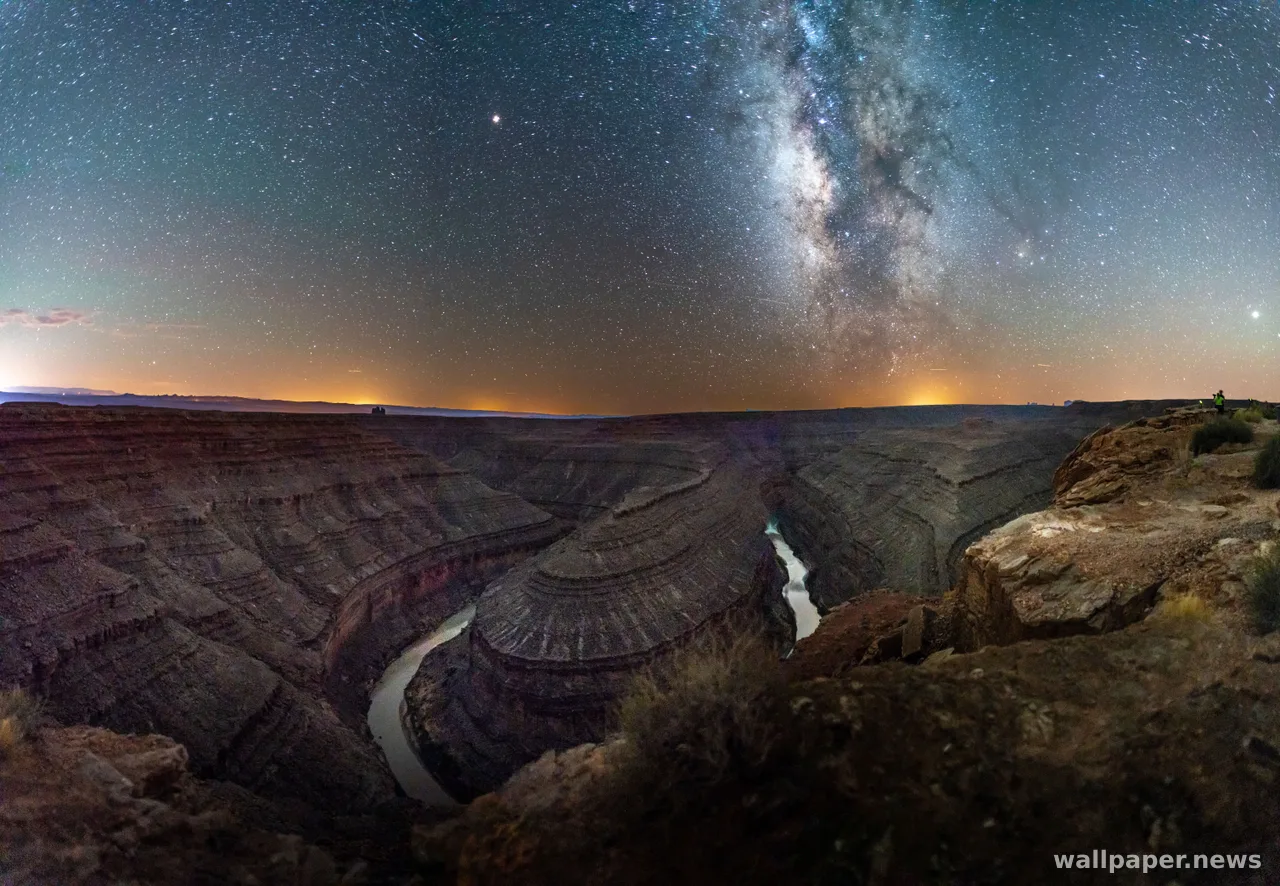
The wallpaper runs all the way up behind that strip, which is why the same notch looks different from one desktop to the next. Over a night sky or a dark sea horizon it nearly vanishes, because black glass sits beside pixels that are almost as dark. Over a pale morning sky it reads as a hard black tab, and the menu bar text, laid on a see-through bar, has to compete with the brightness as well. There is a small geometry catch too: the full panel is about 1.54 to 1, a shade taller than 16:10, so a 16:10 image set to fill loses a thin slice at each side.
The working rule is short. Choose pictures whose top tenth is dark or at least quiet, keep the subject below the upper third, and on a phone give the area around the camera hole to sky rather than to a face or a moon. The cutout is not going anywhere, so the photo simply has to keep its important parts out of the space the camera already occupies.