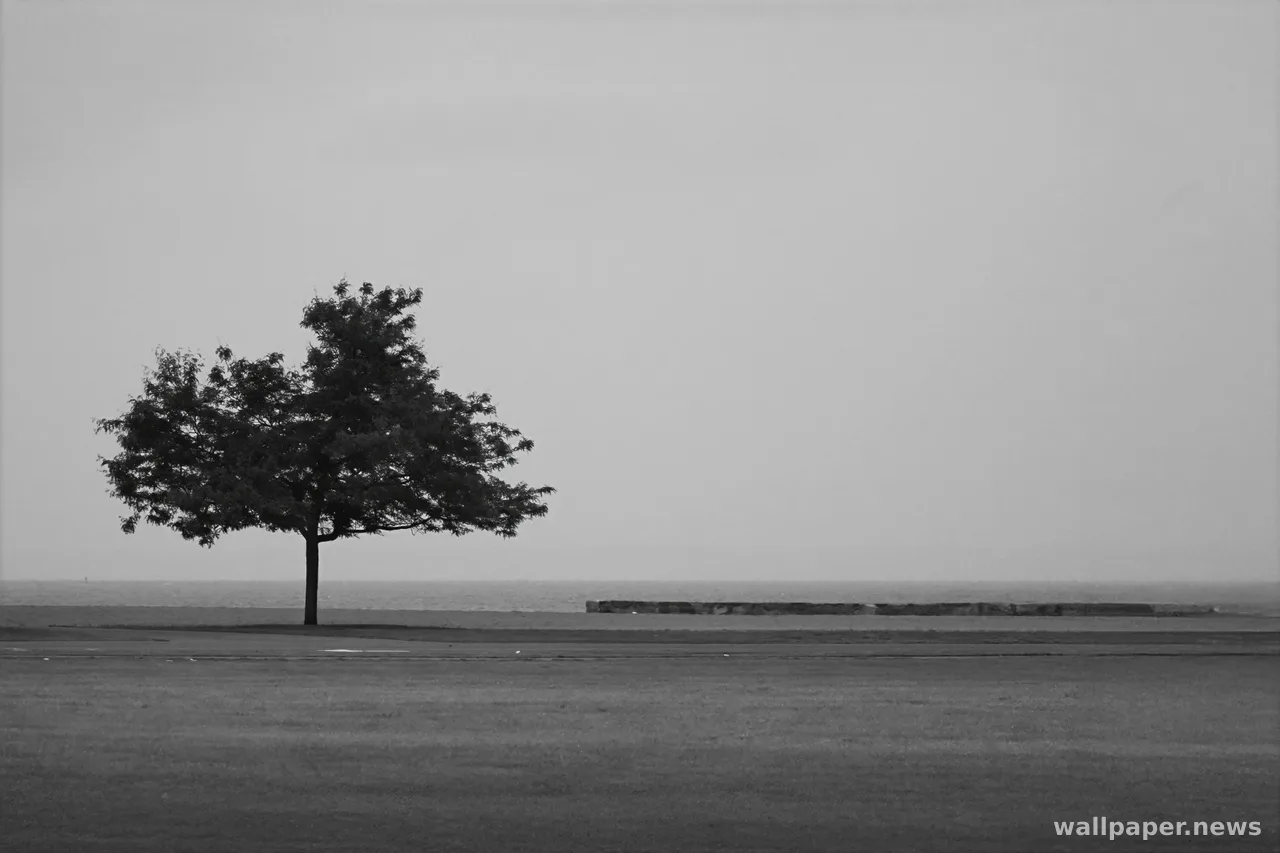
Black Wallpaper on an OLED Screen
On this kind of panel black is not a colour but a pixel that has been switched off.
On an OLED panel a black pixel is not a dark pixel; it is a pixel with the current taken away. That is why a night photograph behaves differently there than on a backlit LCD, where black is only the lowest setting the lamp behind the glass will agree to. The edge between the image and the bezel quietly stops existing, and the wallpaper looks like it is sitting in the glass rather than on it.
The battery question is real, but smaller than the way it usually gets told. Switched-off pixels do draw less, and on a phone that spends hours on a dark home screen it adds up; on a desktop monitor working beside a bright window the saving is closer to a rounding error. The stronger argument is contrast: white labels and small text sit cleanly on a field that is genuinely dark instead of nearly dark.
Pure black works, though it can read as a screen that failed to wake rather than a decision. Pictures that keep a little information in the shadows hold the screen open: a silhouette, one lit window, a moon near the top of the frame. Watch dark gradients for banding, because compression thins out the steps closest to black and the rings appear exactly where the image was meant to be quietest.